Dongguan Huayan New Material Technology Co., Ltd.

Thermal Management

Thermal Management

Research Directions

Focus on the design, manufacturing, and integration of high-performance thermal control modules, including the preparation of microchannel main structures for high-performance thermal control modules based on processes such as additive manufacturing, investigating the influence patterns and mechanisms of process parameters on the heat transfer performance and forming quality of microchannel structures, and improving active control methods for microchannel manufacturing quality; designing and preparing thermal functional structures on microchannel surfaces based on sintering processes, laser processing, and other techniques, exploring the influence patterns and mechanisms of process parameters on the formation scale and morphology of surface microstructures, optimizing related processes, and improving active control methods for high-strength micro/nano structure generation quality; exploring high-reliability connection processes for dissimilar metals, revealing the influence patterns of thermal-mechanical coupling on welding microstructure and performance evolution as well as macroscopic deformation, achieving optimization of sealing connection processes; conducting integrated performance testing research on thermal control modules.

1、Research on microchannel design and manufacturing for thermal control modules;

2、Research on multi-scale enhanced heat transfer micro/nano structure manufacturing for thermal control modules;

3、Research on high-reliability sealing connection processes for thermal control modules;

4、Research on integrated applications of thermal control modules;

5、Performance testing and analysis of electro-thermal control modules.

Research Directions
  • Quick Disconnect (QD) Couplings

    Quick Disconnect (QD) Couplings are one of the most technologically advanced and reliability-demanding components in liquid cooling systems. Their existence enables online hot-swapping and rapid maintenance of IT equipment such as servers.

    The core technology of Quick Disconnect (QD) Couplings is the "No-Drip" or "Dry-Break" design. This means that at the moment of connection or disconnection, the internal valves of the coupling can open or close precisely and synchronously, preventing any coolant leakage, thereby protecting the expensive and sensitive electronic equipment below from damage. This is one of the decisive technologies determining whether liquid cooling systems can be adopted on a large scale in data centers. Liquid cooling Quick Disconnect (QD) Couplings are made of stainless steel with EPDM seals, allowing one-handed connection or disconnection with minimal connection force, easy connection, and very convenient operation.

    Production Process: MIM+NC/Full NC

    Quick Disconnect (QD) Couplings
    Quick Disconnect (QD) Couplings
    Quick Disconnect (QD) Couplings
    Quick Disconnect (QD) Couplings
    Quick Disconnect (QD) Couplings
  • Liquid Cooling Manifolds

    The manifold, also known as a flow divider or distribution manifold, is a key hub for fluid distribution within the cabinet. Its core function is to ensure that coolant delivered from the CDU is evenly and stably distributed to each server or cold plate within the cabinet. A well-designed manifold must precisely balance the flow resistance of each branch circuit, avoiding localized overheating (hot spots) or underflow phenomena caused by uneven flow distribution. Manifolds are typically designed for vertical or horizontal installation based on cabinet layout, with internal flow channels precisely calculated and simulation-optimized to achieve minimal pressure loss and the most uniform flow distribution.

    Liquid Cooling Manifolds
    Liquid Cooling Manifolds
    Liquid Cooling Manifolds
    Liquid Cooling Manifolds
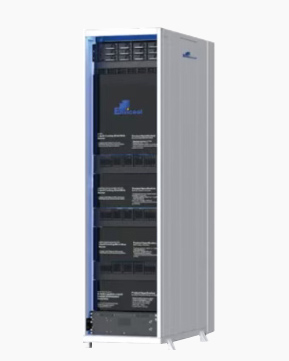
  • All-Metal Cabinet Frames

    Server cabinets designed for liquid cooling systems require special optimization, such as strengthening the structure to withstand the significant weight when filled with liquid, and reserving optimized pipeline routing channels and manifold installation positions.

    Cabinet main frame material: SPCC/AL; Process: Stamping + Sheet Metal + Welding + Spray Coating

    All-Metal Cabinet Frames
    All-Metal Cabinet Frames
    All-Metal Cabinet Frames
    All-Metal Cabinet Frames
  • Metal Cold Plate Modules

    Cold plate liquid cooling, also known as indirect liquid cooling, is currently the most widely applied solution. Its core principle is that the coolant does not directly contact the electronic components inside the server. Instead, sealed metal plates with internal microchannels (i.e., "cold plates") are tightly attached to major heat-generating components such as CPUs and GPUs. The coolant circulates inside these cold plates, efficiently "absorbing" the heat generated by the chips.

    Cold plate liquid cooling technology dominates the liquid cooling server market. Its biggest advantage lies in its friendliness to retrofitting existing data centers. Since it primarily targets high-power consumption components like CPUs and GPUs for heat dissipation, it can remove the vast majority of heat within the cabinet. The manufacturing of cold plates is a complex process integrating multiple processes. Their internal channel design has a decisive impact on heat dissipation efficiency and fluid pressure drop. Design solutions have evolved from simple embedded tube types to more complex structures such as micro-channels, skived-fin, or folded-fin structures. These intricate structures significantly increase the contact surface area between fluid and solid, thereby markedly enhancing heat exchange efficiency.

    Copper heat sink production process: CNC + Welding

    Metal Cold Plate Modules
    Metal Cold Plate Modules
    Metal Cold Plate Modules
    Metal Cold Plate Modules
    Metal Cold Plate Modules